Hugh Grosvenor, 2nd Duke of Westminster, known as “Bendor”, owned much of London’s Mayfair and Belgravia. In 1916 he led Rolls-Royce armoured cars across the desert from Salloum, at Aqqaqir, through the Halfaya Pass and on the famous rescue at Bir Hakeim.
Half-brother of the Ottoman war minister Enver Pasha, Nuri Bey commanded the Senussi forces on Egypt’s western coast in 1915–1916. Two years later he led the Army of Islam into Baku. A soldier whose path crossed Matrouh.
In 1915 he commanded the Senussi forces on Egypt’s western coast; in February 1916 he surrendered to a British cavalry officer near Sidi Barrani; a few years later he was Prime Minister of Iraq. The remarkable life of Jaafar al-Askari.
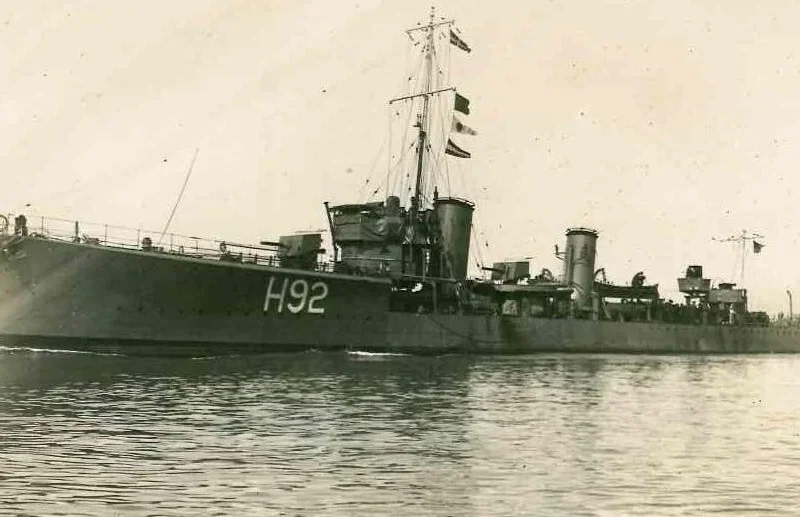
A former Holyhead ferry, torpedoed in the Bay of Salloum in November 1915; ninety-two survivors marched into the desert as prisoners of the Senussi; a captain’s letter found in a Salloum house; and a dash of armoured cars to Bir Hakeim. The story of HMS…
Salloum was among the first places the British gave up in the Senussi campaign, and the last on the coast to be regained. Between November 1915 and March 1916 it changed hands, and its recapture ended with a thirsty march, a dash of armoured cars…
South-east of Sidi Barrani, on 26 February 1916, a British column broke the Senussi forces on the coast. A charge by the Dorset Yeomanry ended with its commander thrown from his horse in front of Jaafar Pasha, the Ottoman officer leading the Senussi, who surrendered…
When the war came to Egypt’s western frontier in 1915, its first line of defence was the Egyptian Coastguard. Within weeks the cruiser Abbas lay sunk at Salloum, the post was evacuated by sea, and more than a hundred coastguardsmen rode off to join the…
The town of Sidi Barrani bears the name of a man: El Saadi El Barrani, a Senussi sheikh from Libya who taught the Quran, settled in the zawiya by the sea and married into a local family. What the sources tell of him.
West of Marsa Matrouh, in Negaila district, Mathani is one of the largest villages in the governorate: a place of sea caves and sea views on one side, rain-fed figs, olives and barley on the other.
At the foot of the great escarpment on the Libyan border, Salloum is Egypt’s westernmost town. Its district counts a few villages, Abu Zuraiba, Buqbuq and El Rabiya, and scattered Bedouin gatherings such as El Hol, Safafi and Awgarin.
Sidi Barrani is called the “mother of the tribes” because nearly every tribe of the Western Desert lives on its land. Its eight villages, from Abu Stal, the largest, to tiny Qatrani, live on rain-fed farming, Barqi sheep and the sea.
Negaila began as a coastal hamlet known as the Zawiya of Negaila, 78 km west of Marsa Matrouh. Today it is a district with two villages, Mathani, among the largest in the governorate, and Zughairat.
A small village on the coast road west of Sidi Barrani, Buqbuq takes its name from the sound of fresh water bubbling from a well by the sea. It has seen a Senussi zawiya, a desert battle in 1940 and, lately, camel races.
In 1931 Italy strung some 270 km of barbed wire from the Gulf of Salloum to Jaghbub to cut off the Libyan resistance from Egypt. Omar al-Mukhtar had passed through Salloum, and his family found refuge in Matrouh.
On 6 December 1925 Egypt and Italy, then ruling Cyrenaica, signed the agreement that still defines Matrouh's western border: a line starting 10 km north of Salloum, the Ramla Well and its corridor for Egypt, and Jaghbub on the Libyan side.
Welcome to MatruhTravel 👋
Sign up for free to save your favourite places, plan your next trip, list or browse items for sale and rent, and message sellers.