Few episodes of the First World War on Egypt’s western frontier are as dramatic as the story of HMS Tara and her crew.
A ferry goes to war
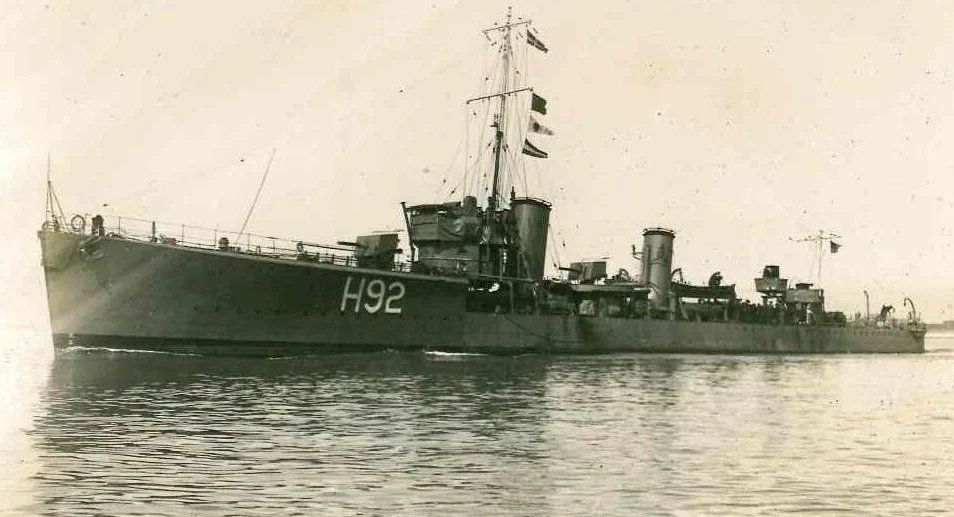
The ship began life as the Hibernia, built by William Denny and Brothers at Dumbarton for the London and North Western Railway, and sailed the Holyhead–Ireland route from 1900. In 1914 the Admiralty requisitioned her as an armed boarding steamer and renamed her Tara. Much of her Welsh crew stayed aboard, under the joint command of her master, Captain Edward Butler Tanner, and Captain Rupert Gwatkin-Williams of the Royal Navy. After service in the Irish Sea she was sent to the Mediterranean, where she made a regular run to Salloum.
5 November 1915
On the morning of 5 November 1915, close to the shore of the Bay of Salloum, the Tara was torpedoed by the German submarine U-35, then commanded by Waldemar Kophamel; days later the boat passed to Lothar von Arnauld de la Perière, who would become the most successful submarine commander in history. Twelve men, most of them from the engine room, were killed. The 92 survivors in the lifeboats were towed by the submarine to the coast of Cyrenaica and handed over to the Senussi as prisoners. The crew of the horse transport Moorina, sunk two days later, shared their fate.
Three weeks into the desert
After a march of about three weeks, the prisoners reached Bir Hakeim on 26 November: a place of two Roman wells, a tomb and an Ottoman blockhouse, some 160–190 km west of Salloum in what is now Libya. Famine was spreading through the region with the war, and the prisoners suffered terribly from hunger. Four of the Tara’s men died in captivity, and one more after the rescue. Captain Gwatkin-Williams tried to escape.
The letter
When the British reoccupied Salloum on 14 March 1916, they found in a house a letter from Gwatkin-Williams describing where the prisoners were held. The intelligence officer Captain Leopold Royle questioned Senussi prisoners and confirmed it.
The dash to Bir Hakeim
On 17 March 1916 the Duke of Westminster led a column of some 45 vehicles: nine Rolls-Royce armoured cars, other cars and Ford ambulances. Starting before dawn, they crossed the desert and surprised the guards, who fled, pursued by two of the cars. About 91 prisoners, close to starvation, were rescued without British loss and brought back to Salloum. One armoured-car driver later described the cars shooting down those fleeing, among them women and children. The historian Charles Stephenson judged that no other means then available could have achieved the raid.
Remembering the Tara
Gwatkin-Williams told the story in his book Prisoners of the Red Desert, and the town of Holyhead, home of many of the crew, has kept the memory alive.
Frequently asked questions
Who sank the Tara?
The German submarine U-35, then under Waldemar Kophamel, on 5 November 1915 in the Bay of Salloum.
Where was Bir Hakeim?
About 160–190 km west of Salloum, in today’s Libya.
How many prisoners were rescued?
About 91, on 17 March 1916.