From 23 October to 4 November 1942 the Eighth Army under Montgomery fought the Second Battle of El Alamein against Rommel's army: Operations Lightfoot and Supercharge, the "Devil's gardens" of about half a million mines, and a victory that drove the Axis out of Egypt.…
Erwin Rommel, the commander his enemies called the "Desert Fox", led Axis forces in North Africa from 1941 to 1943, sweeping across Matrouh to El Alamein before being defeated there. Discover his Western Desert story, his stops in Matrouh and his end.
Beneath the sands of the northwest coast lie millions of World War II mines and unexploded ordnance, over an estimated 2,680 km². Discover the scale of the problem, its victims, clearance efforts since 2006, and what visitors need to know to stay safe.
Along the Matrouh coast are ancient wells and cisterns dug to store rainwater, some dating to Ptolemaic and Roman times, and the Bedouin still use them. Discover their story, the wells of the Qasr area, and today's projects to rehabilitate them.
Omayed reserve near El Hammam, about 80 km west of Alexandria: a UNESCO biosphere reserve since 1981 and an Egyptian protected area since 1986, covering about 758 km² of limestone dunes, ridges and salt depressions, and home to more than 17% of Egypt's known mosses.
Siwa Protected Area, declared in 2002 over about 7,800 km² in three sectors: salt lakes, springs and dunes; gazelles, fennec foxes and migrating birds; some 40 grazing and medicinal plant species; and what the reserve's rules prohibit.
The Gulf of Salloum Marine Protected Area, declared in 2010 over about 383 km²: the first reserve with a purely marine component in Egypt's Mediterranean waters, with seagrass meadows, sea turtles and more than 160 bird species, and the threats it faces.
Matrouh is Egypt's fig capital: some 60,000 feddans of rain-fed fig orchards, annual production of about 137,000 tonnes, the Barshoumi as its best-known variety and a harvest in August and September, alongside olive oil, barley and the cisterns that store rainwater.
Every autumn millions of migrating birds cross Egypt's skies, reaching Matrouh's coast from mid-August to late October. Discover the best-known species such as quail and turtle doves, the Bedouin traditions of the season, hunting permits, and why protecting migrating birds matters.
A practical guide before travelling to Marsa Matrouh and Siwa: ID and checkpoints, cash and ATMs in Siwa, weak signal in the desert, permits for Great Sand Sea trips, clothing by season, respecting local customs, and safety at sea.
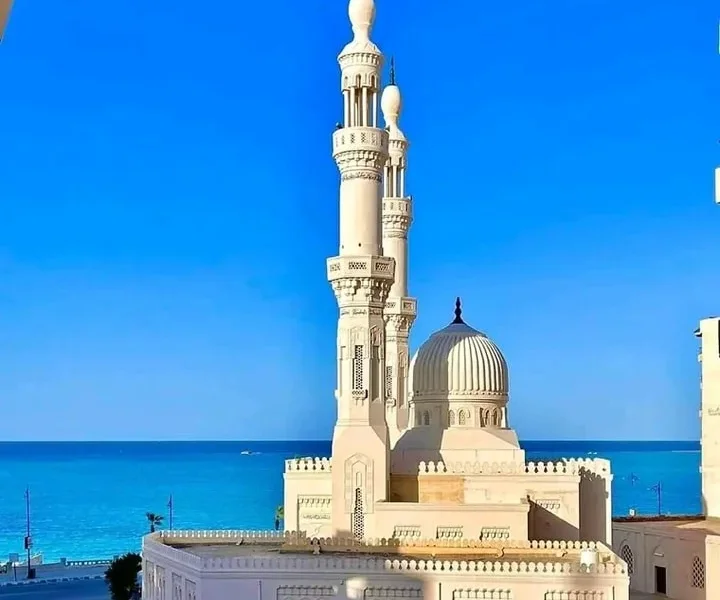
Sidi El Awwam Mosque is Marsa Matrouh's largest and best-known mosque, standing on the corniche with its huge dome and two tall minarets. Discover the story of the holy man it is named after, its history up to its current form in 1969, and its…
Alam El Roum, about 12 km east of Marsa Matrouh: the name's origin in an old Roman fort, its calm beach, the salt pans that draw migrating birds, the historic Smala station, and the new Alam El Roum project on a 7.2 km seafront.
Every 15 December Matrouh celebrates its National Day in memory of its tribes’ resistance to the British army in 1915. The best-known battle was fought at Wadi Majid, west of the city, after two weeks of ambushes and a pause imposed by bad weather. The…
On the coastal road east of Marsa Matrouh lie Bagush and Fouka, two names tied to World War II: the "Baggush Box", where British troops rehearsed Operation Compass in 1940, and Fouka, where Rommel tried to hold a line after his defeat at El Alamein…
Near Salloum and the Libyan border lies Halfaya Pass, which Allied soldiers called "Hellfire Pass" after the battles of 1941, and nearby the Halfaya Sollum War Cemetery, holding 2,046 World War II servicemen from Britain, South Africa, New Zealand, Australia, India and elsewhere.
Welcome to MatruhTravel 👋
Sign up for free to save your favourite places, plan your next trip, list or browse items for sale and rent, and message sellers.